For urban dwellers living a routine life between home and office, oscillating from intense competition to lying flat, where can people find a moment of respite in the dense concrete jungle of the city? A private haven for relaxation?
During the renovation gap period of Sony Group's Tokyo headquarters, the original building was transformed into Sony Park, much like creating a small oasis for the bustling metropolis; New York's Central Park is even hailed as the “city's backyard garden,” but this is far from enough—this time, the boundaries of urban public spaces are being pushed even further, taking you beyond the continental limits of the city.

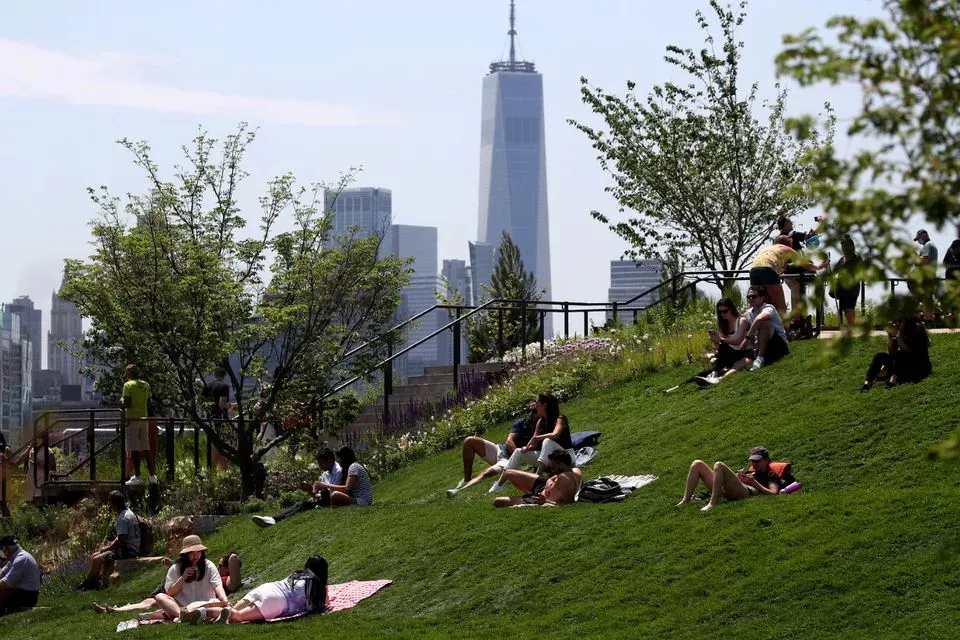
British architect Thomas Heatherwick(Thomas Heatherwick)and his studio used 132 concrete columns to build an artificial island park spanning approximately 9,712 square meters(2.4 acres)on the Hudson River in New York: Little Island(Little Island), embracing everyone who wishes to “escape” urban life.
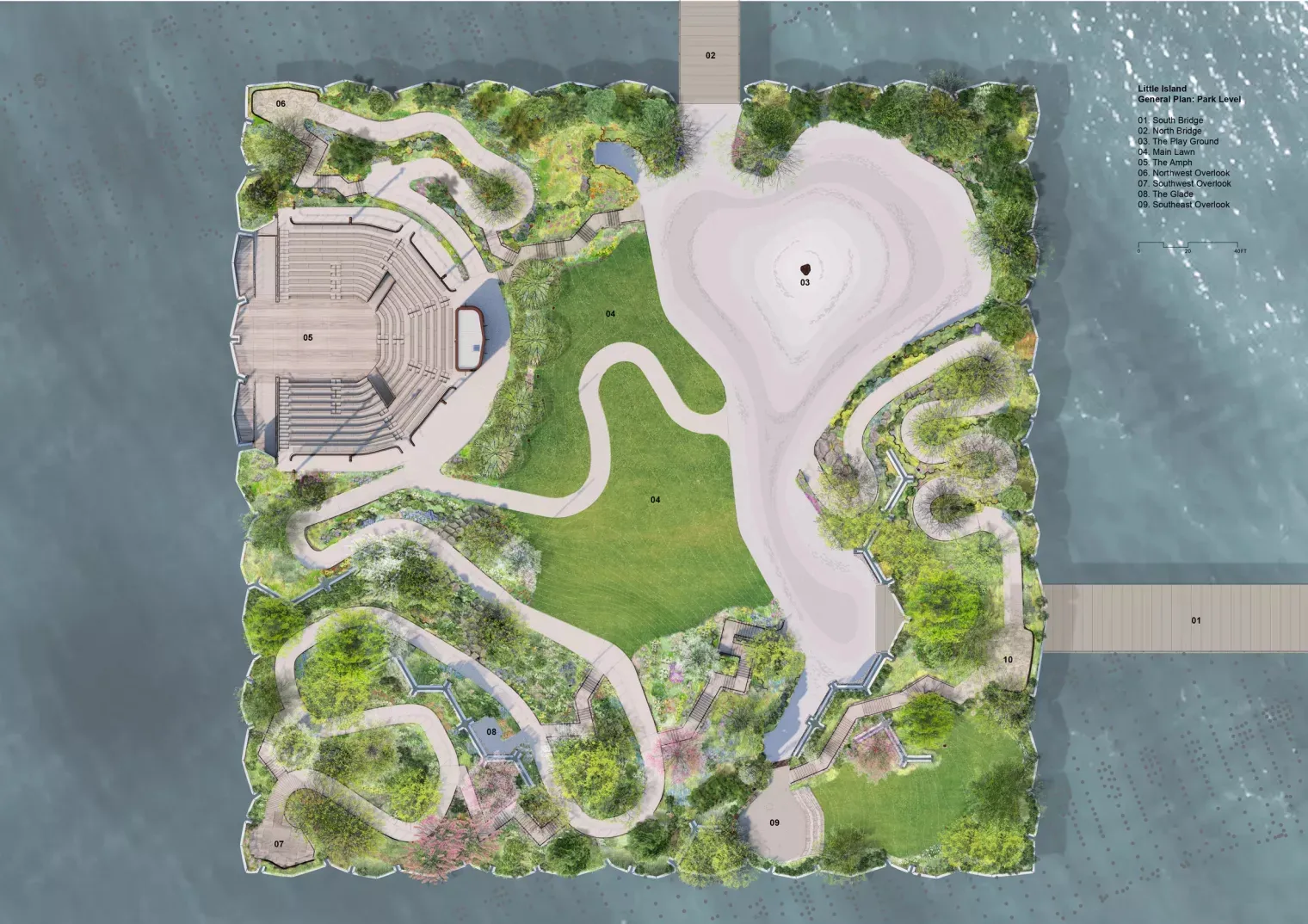
This “paradise away from the city” was created by Heatherwick Studio in collaboration with engineering firm Arup(Arup)and New York landscape design team MNLA, providing citizens with more park spaces within the city. The island is located near the Chelsea neighborhood(Chelsea)on Manhattan's West Side in New York, accessible via two bridge pathways. The island features over 540 meters of winding trails that pass through different areas including a theater and plazas.
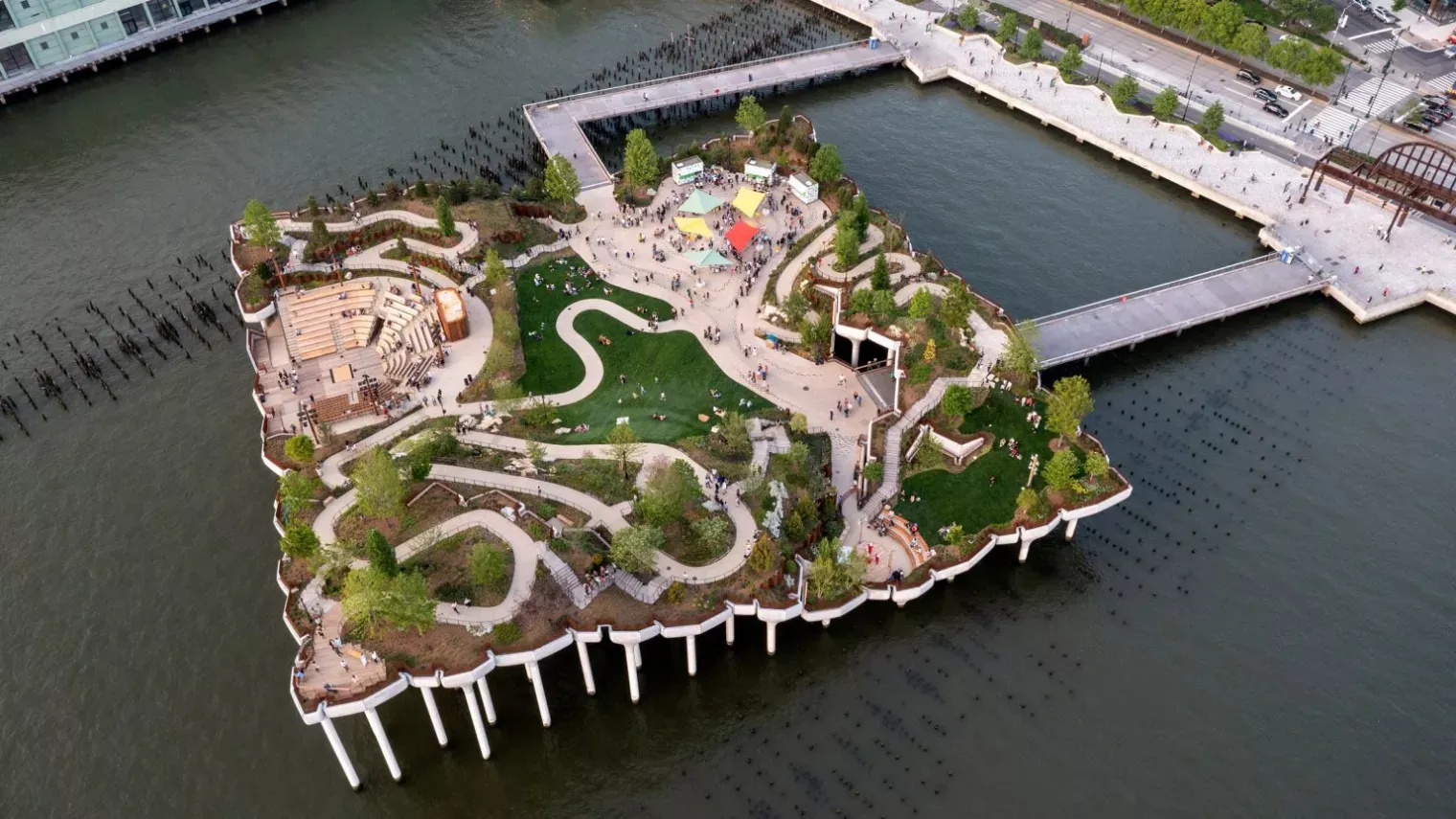
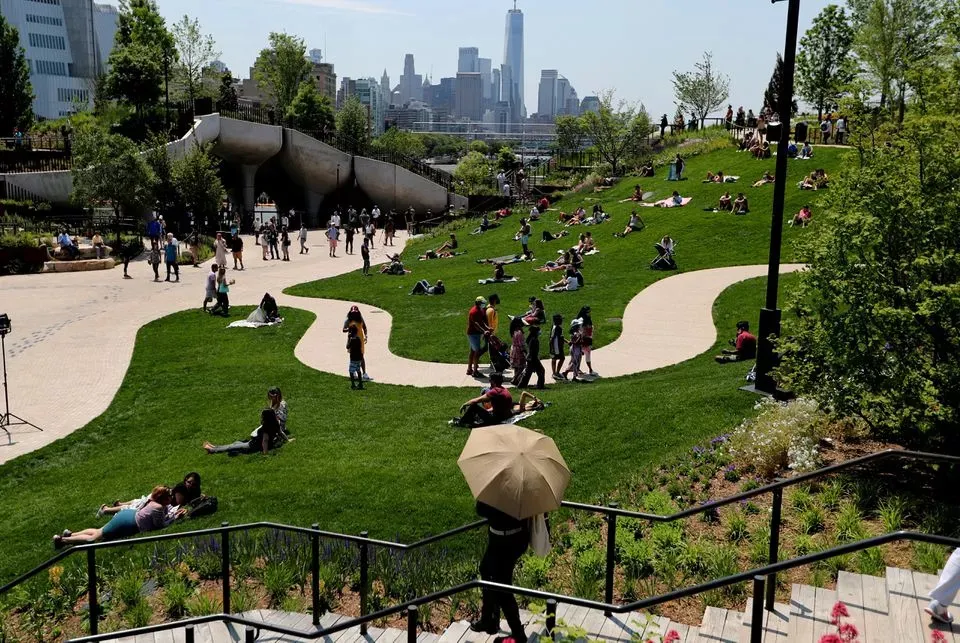
The Little Island construction project is part of the Hudson River Park renewal initiative, originally known as Pier 55 Project. Initially, the plan was merely to build a pavilion on the pier, but Heatherwick Studio conceived a more novel idea: an island elevated above the river, detached from the mainland.
The design of Little Island was inspired by Heatherwick's observation of Pier 54, which was once the disembarkation point for Titanic survivors in 1912 but has long since fallen into disuse, leaving only a cluster of piles protruding from the water*. The pier's structure made Heatherwick's vision feasible—350-ton concrete columns were driven 61 meters into the bedrock beneath the water, supporting a haven of joy above the Hudson River.
*The structure of a high-level pier includes piles driven into the riverbed and a deck section above water, with the latter typically constructed in forms such as beam-and-slab, flat-slab without beams, frame, or pile-supported deck types.
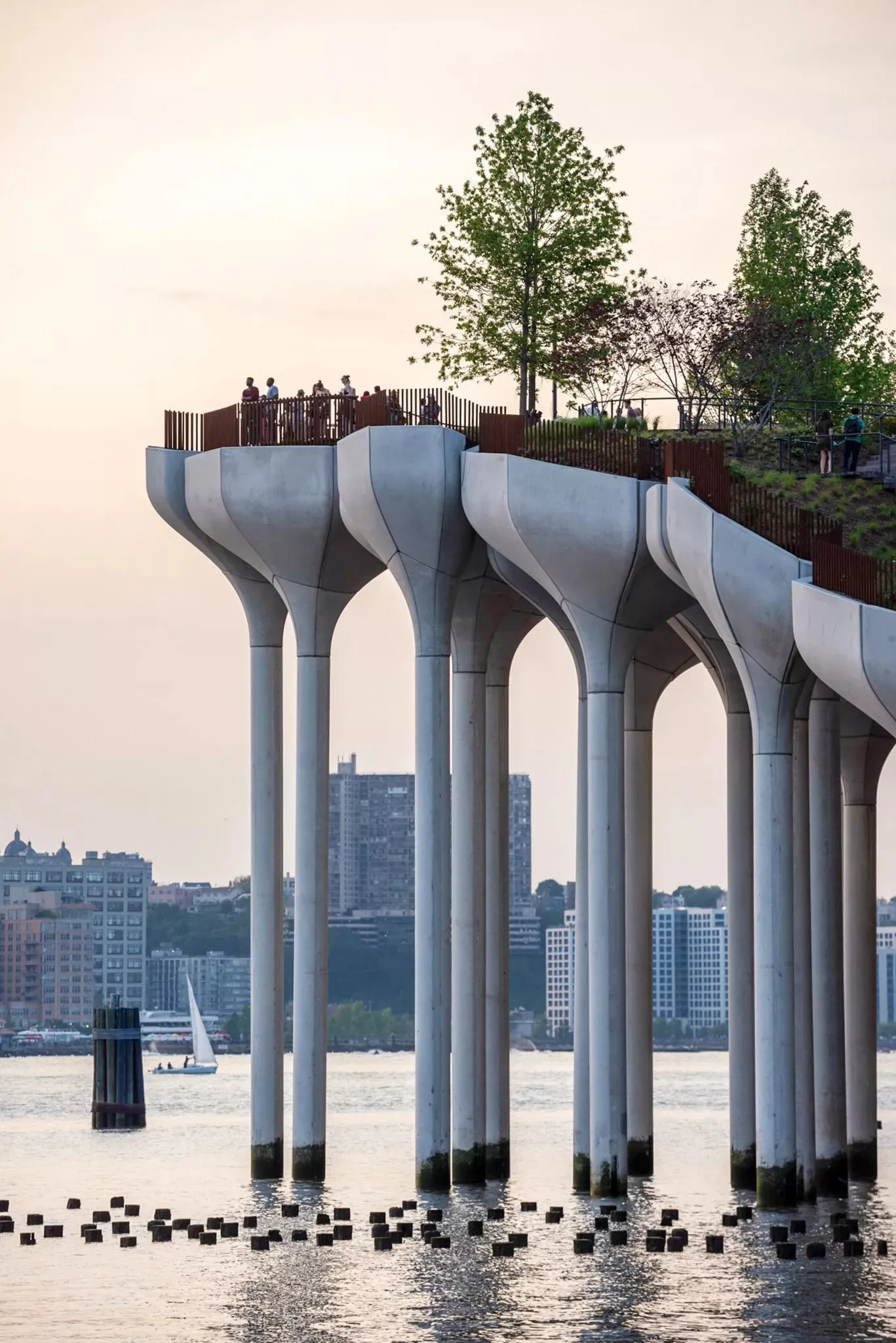
The insights derived from pier structures and civil engineering knowledge were essential information for both the construction process and the island's future operations in facing extreme river conditions. After experiencing Hurricane Sandy, the design team decided to shorten the distance between the island and the mainland, while also reinforcing the island's original structural design, maintaining water levels well below the island's elevation to reduce the risk of flooding.
What makes Little Island even more distinctive is that while typical piers are flat, Little Island features undulating terrain due to the varying heights of its concrete columns. Heatherwick hopes that the island's elevated topography will create a sense of escaping Manhattan. Although it's an “escape from Manhattan,” when people find themselves observing the city from this vantage point, their emotional connection to New York actually becomes stronger. This is similar to how some people only deeply miss their hometown when studying or working abroad.
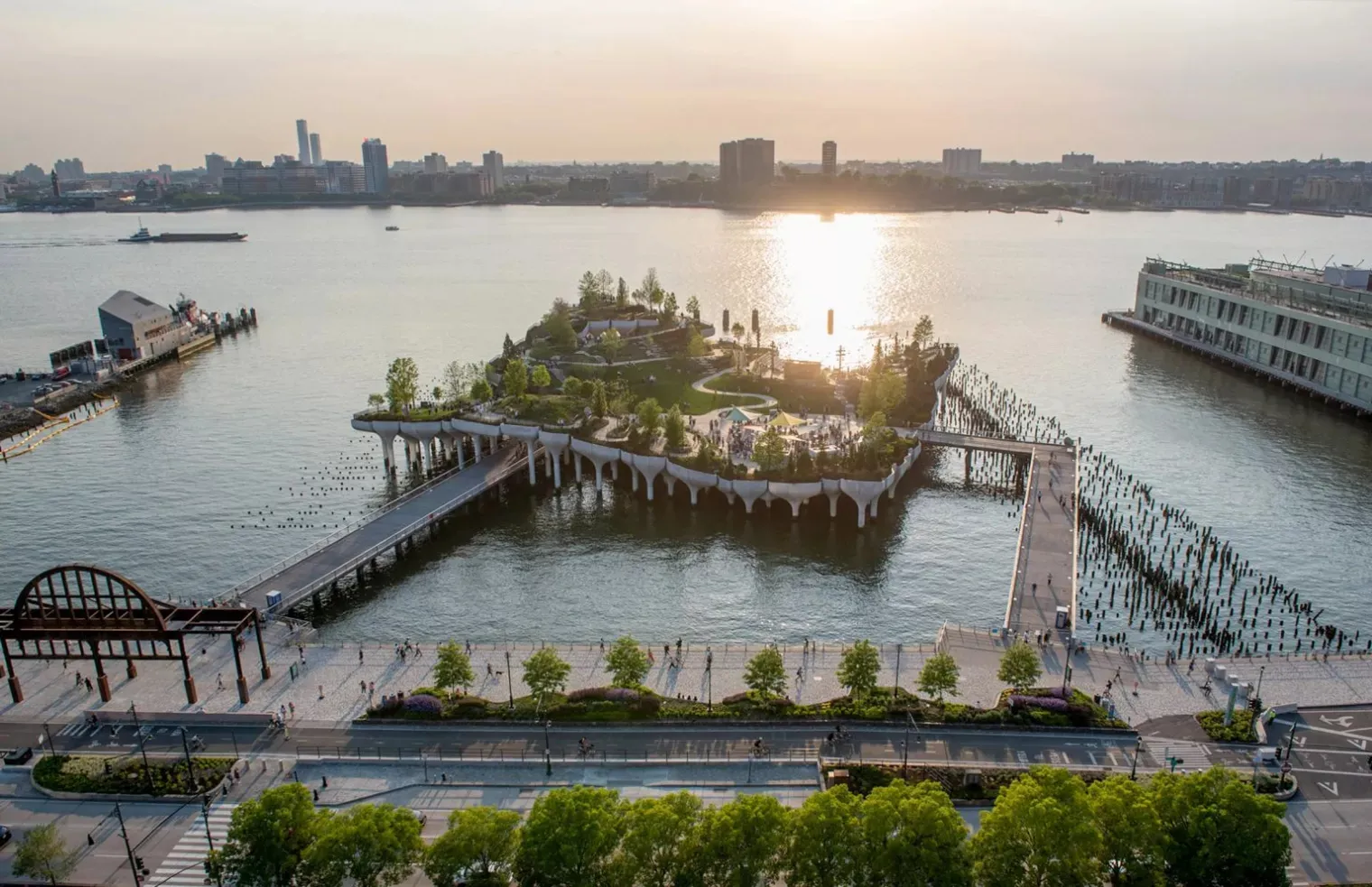
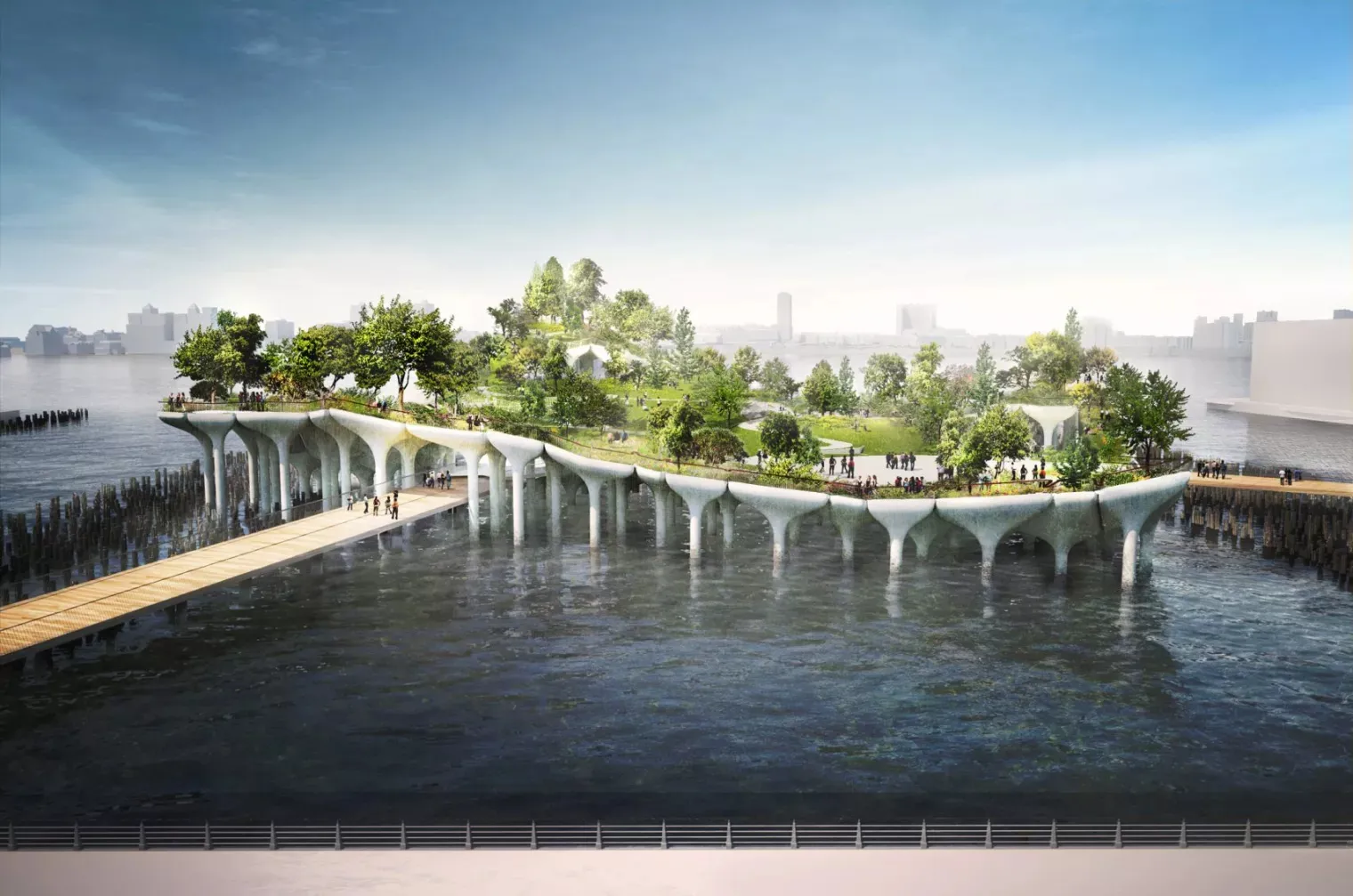
The tops of the concrete columns are specially crafted into flower shapes with openings six meters wide, designed not only to hold the park's soil but also to symbolize openness and the gathering of citizens. Due to the island's undulating terrain, different planting landscapes can be planned according to the specific conditions. Currently, nearly 400 plant species and nearly 100 evergreen tree varieties are planted, with lush greenery carpeting the ground. Throughout the four seasons, strolling through the park to admire the diverse flora is truly delightful. These plants also provide some wind protection for people walking in Hudson River Park.
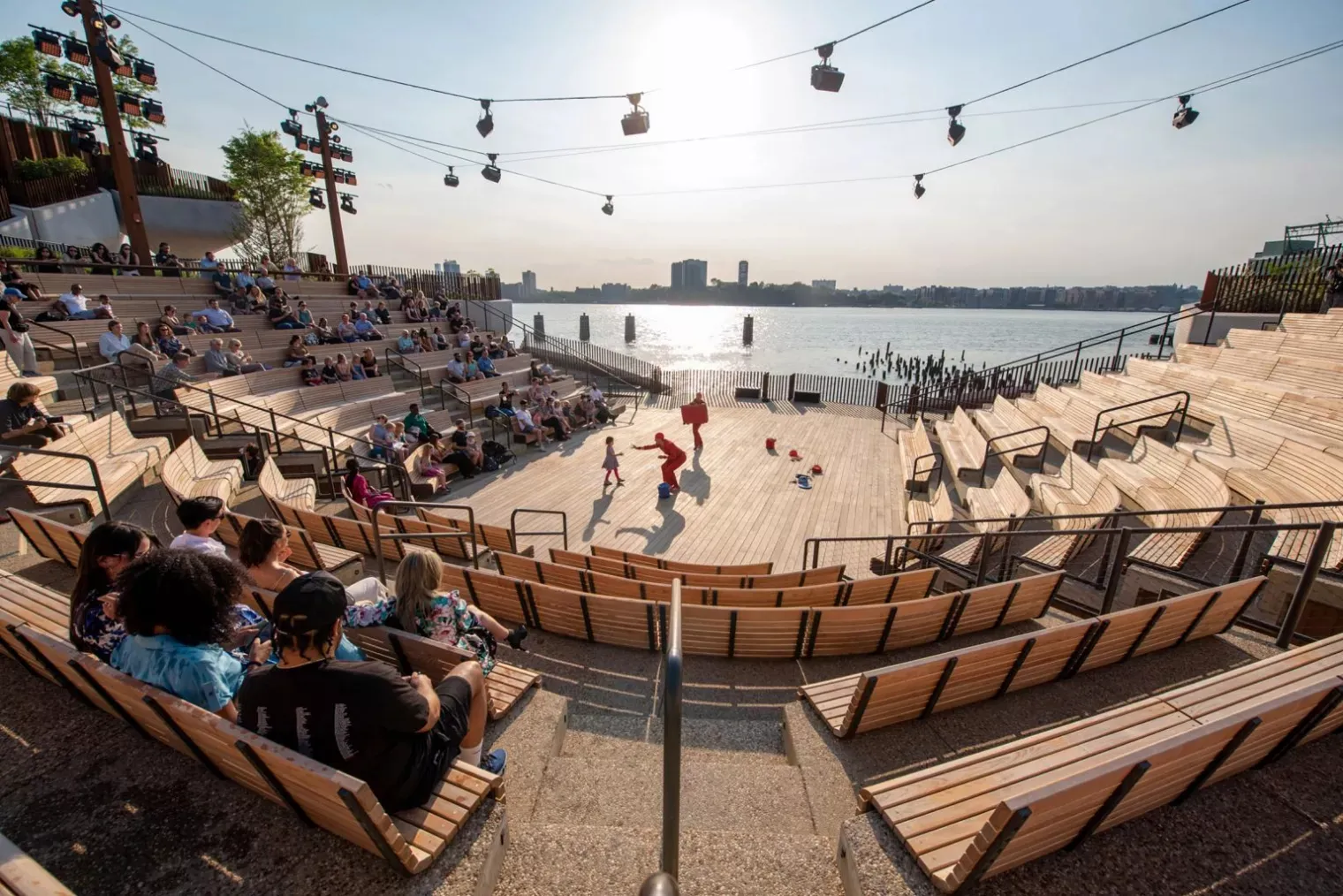
The island features three open spaces, ranked by capacity: a small stage accommodating 200 people, an amphitheater seating 700 spectators, and a central plaza capable of holding 3,500 people. It is particularly worth noting that all backstage facilities and equipment required for performances are housed off-island and can be transported via the bridge pathways when needed, thus preserving the island's ecological environment and landscape.
BY TOPYS